
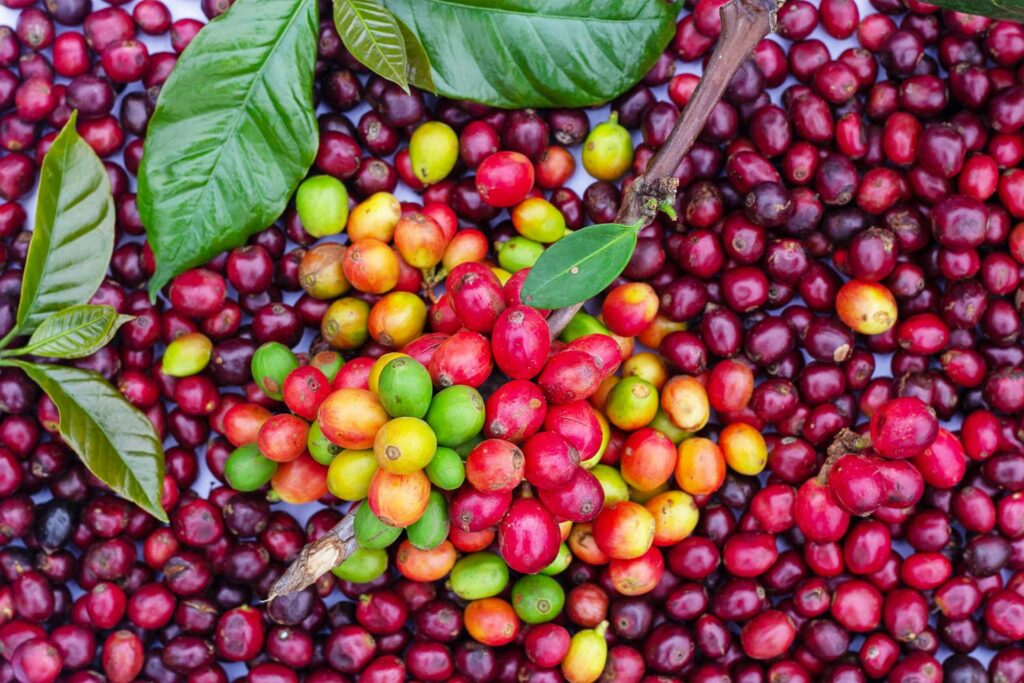
Ethiopian Coffee
Ethiopia is the birthplace of coffee and remains one of the most diverse producing countries in the world. Its regional variation, altitude, and traditional processing methods create a wide spectrum of profiles suitable for both specialty and commercial use.
Ethiopian coffee offers flexibility across grades, processing methods, and supply structures, allowing buyers to build consistent sourcing across different market segments.
Regions
Ethiopian coffee is defined by its regional diversity. Each region produces distinct profiles shaped by altitude, climate, and local practices.
Sidama
Balanced and versatile coffees available in both washed and natural processing, suitable across multiple applications.
Yirgacheffe
Structured and refined coffees, typically washed, known for clarity and consistency.
Guji
Complex and fruit-forward coffees, particularly in natural processing, supporting specialty positioning.
Lekempti
Consistent coffees suitable for blending and broader commercial use.
Jimma
Volume-driven coffees with flexible grades, commonly used for commercial supply.
Bench Maji
Available across washed and natural processes, supporting a range of sourcing requirements.
Grades
Ethiopian coffee is structured through a grading system that reflects quality, screen size, and defect levels.
Higher grades offer cleaner and more refined profiles, while lower grades provide flexibility for blending and commercial applications.
This grading structure allows buyers to align sourcing with both quality expectations and pricing targets.
Processing
Processing plays a key role in defining structure and flavour.
- Washed coffees – clean, structured, and consistent
- Natural coffees – heavier body with fruit-forward characteristics
Both processing methods are available across most producing regions.
Supply Structure
Ethiopian coffee sourcing requires coordination across multiple regions and supply layers.
Oloi Shorua Coffee structures supply through:
- Multi-region sourcing across all major coffee zones
- Access to multiple grades and processing methods
- Mixed-lot and container-level consolidation
- Export coordination and delivery
This ensures consistency and flexibility across all shipments.
Applications
Ethiopian coffees are used across multiple segments:
- Specialty roasting
- Blending structures
- Single-origin offerings
- Commercial supply
The diversity of Ethiopian coffee allows buyers to build structured portfolios across different market requirements.
Profile
Ethiopian coffee is known for its diversity of profiles across regions and processing methods.
Typical characteristics include:
- Bright acidity in washed coffees
- Fruit-forward notes in natural processing
- Floral and citrus elements in high-altitude regions
- Medium to full body depending on origin and grade
Profiles vary significantly by region and processing, allowing buyers to select coffees aligned to specific market requirements.
Work With Us
Oloi Shorua Coffee provides structured access to Ethiopian coffee across regions, grades, and processing methods.
For detailed specifications and availability, contact us directly or explore other origin pages.
Explore Other Origins
Explore coffee from other producing regions: